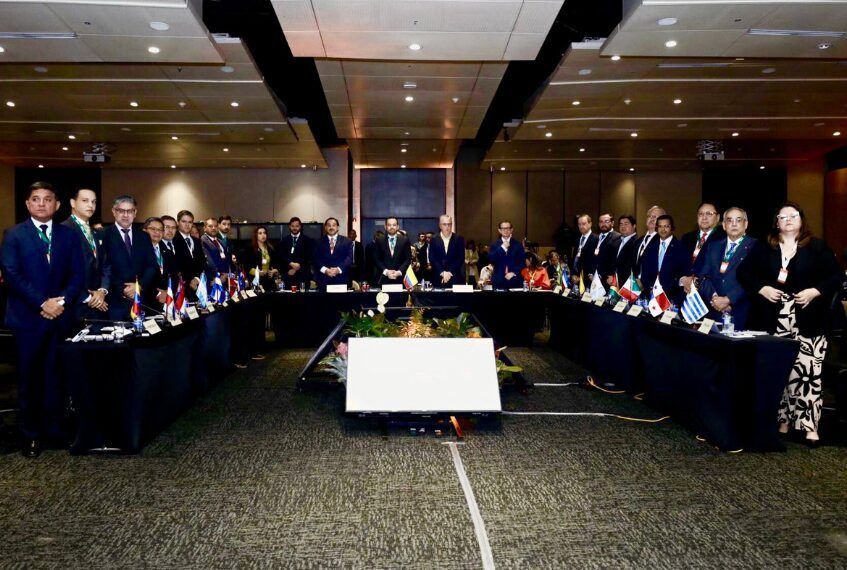
The Latin American and Caribbean Energy Organization (OLACDE) took part in the VII Meeting of Energy Ministers of the Community of Latin American and Caribbean States (CELAC), held in Bogotá, Colombia. The meeting brought together energy authorities from across the continent to strengthen regional consensus around a just and sustainable energy transition.
During the event, OLACDE’s Executive Secretary, Andrés Rebolledo, emphasized that the energy transition in Latin America and the Caribbean must be built collectively, through regional cooperation, technical dialogue, political will, and recognition of the diversity of national energy matrices and contexts.
“Our Latin America and the Caribbean is a privileged region with great energy resources, but also a very diverse one. That is why, at OLACDE, we speak of energy transitions in the plural,” Rebolledo stated.
OLACDE’s head noted that 70% of the region’s electricity already comes from clean sources, and that enormous potential remains untapped: only 10% of wind resources, 30% of hydroelectric potential, and barely 2% of solar and geothermal potential have been used so far. The region also contributes 27% of the world’s biofuel production, 5% of natural gas, and 10% of oil.
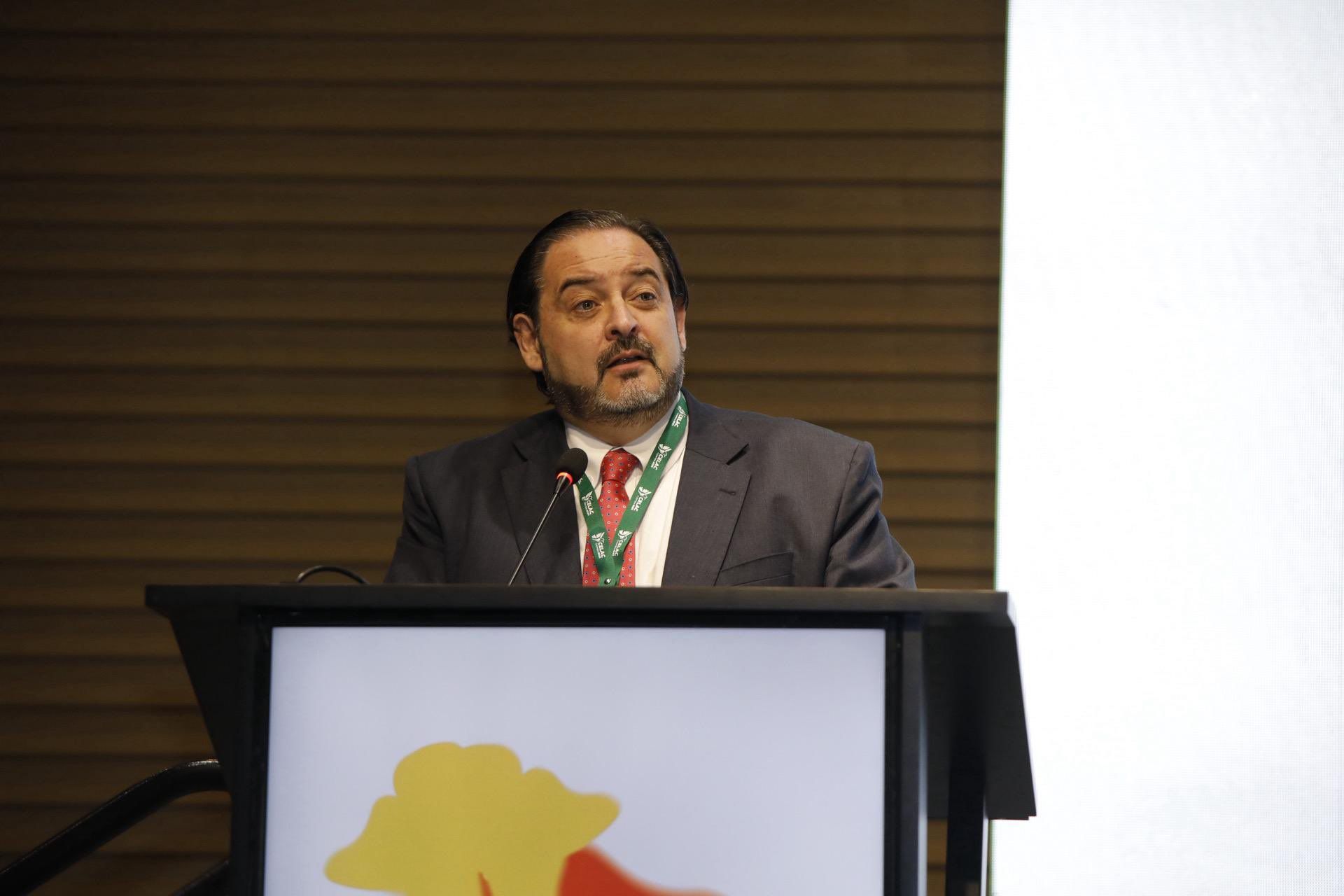
In his remarks, Rebolledo stressed that the key challenge is to turn this energy wealth into social inclusion, job creation, economic development, and climate resilience, through the design of appropriate public policies, stable regulatory frameworks, sustained investment, public-private balance, the participation of women and youth, and better-coordinated regional energy governance.
He also reaffirmed the importance of maintaining technical and political continuity within CELAC, praising the progress achieved during Honduras’s pro tempore presidency, and highlighted that this VII Meeting is an opportunity to consolidate a shared vision for the region’s energy future.
“The energy transition is no longer an aspiration — it has become an urgent necessity,” he noted.
For his part, Colombia’s Minister of Mines and Energy, Edwin Palma, reiterated his country’s commitment to transforming the energy sector, highlighting initiatives such as the “Colombia Solar” program, which in 2026 will allocate 250 million dollars to provide photovoltaic solutions to vulnerable households.
The meeting was organized by Colombia’s Ministry of Mines and Energy, in its capacity as Pro Tempore Presidency, with technical support from OLACDE as CELAC’s Executive Energy Secretariat. One of the main points of consensus was the need to accelerate regional electrical interconnection processes and move toward an integrated Latin American energy market.