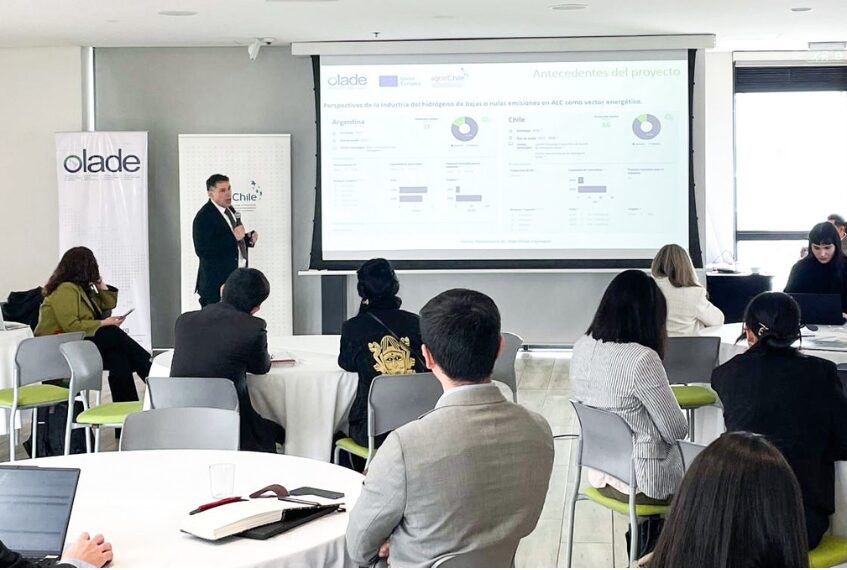
As part of the triangular cooperation project between the Latin American and Caribbean Energy Organization (OLACDE), the European Union (EU), and the Chilean Agency for International Development Cooperation (AGCID), National Workshops for Strengthening Capacities in International Certification Standards for Low- or Zero-Emission Hydrogen and Its Derivatives were held in Colombia and Panama.
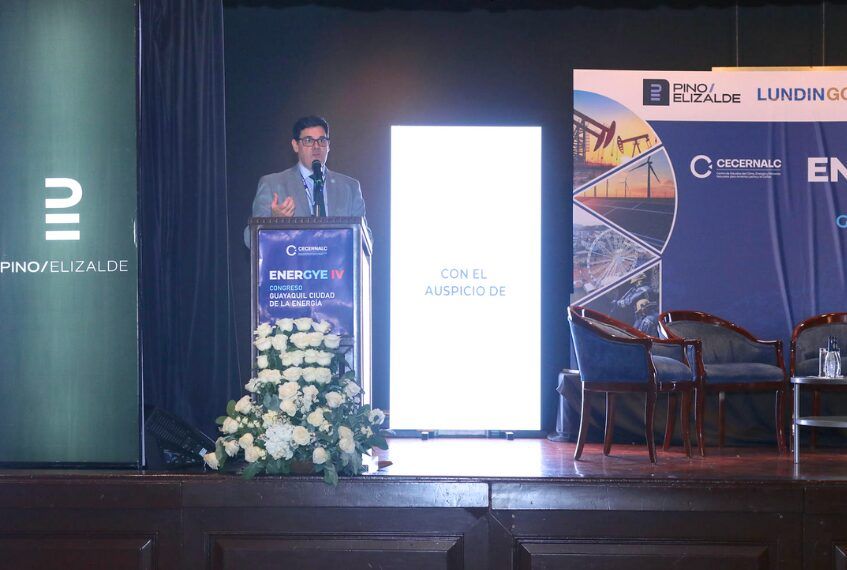
Representing OLACDE, Fabio García, a specialist at the organization, presented the objectives, scope, and expected outputs of the EU-AGCID-OLACDE H2V triangular project, highlighting the coordination among the working team.
For his part, Medardo Cadena, advisor to OLACDE’s Executive Secretary, spoke about the attributes that renewable hydrogen projects in Latin America and the Caribbean must meet in order to access international markets such as the European Union. He underscored the importance of certification and metrology in ensuring traceability and sustainability. Likewise, David Delgado, the project’s Technical Director at OLACDE, shared the regional vision for hydrogen development in the region, pointing out the requirements for exporting renewable projects and the relevance of certification for traceability.
Among the points highlighted were:
• The high potential for renewable energy in Latin America and the Caribbean.
• The need for solid certification and metrology schemes to ensure sustainability and access to international markets.
• Projections of competitive hydrogen production costs in the region.
• Regulatory challenges, water stress, and emissions certification methodologies.
• The expected impact on investment, employment, and human capital formation in the regional energy sector.
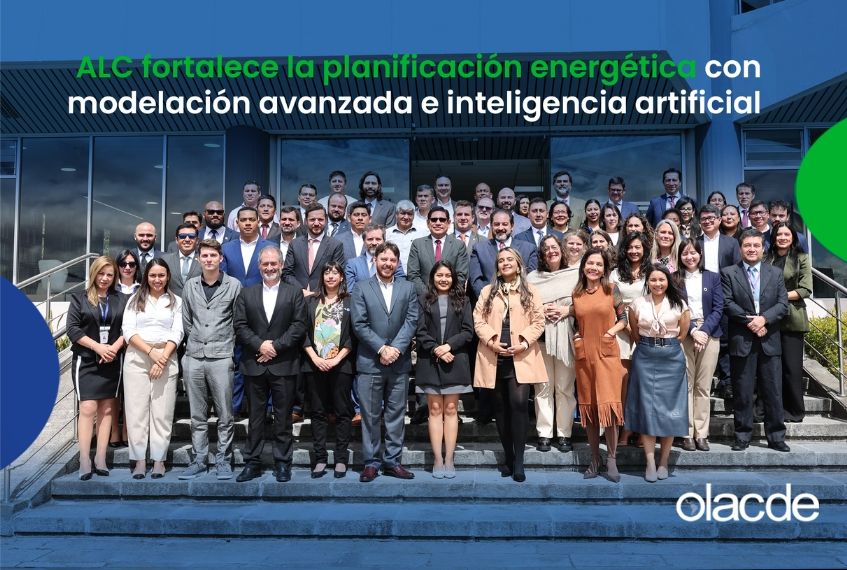
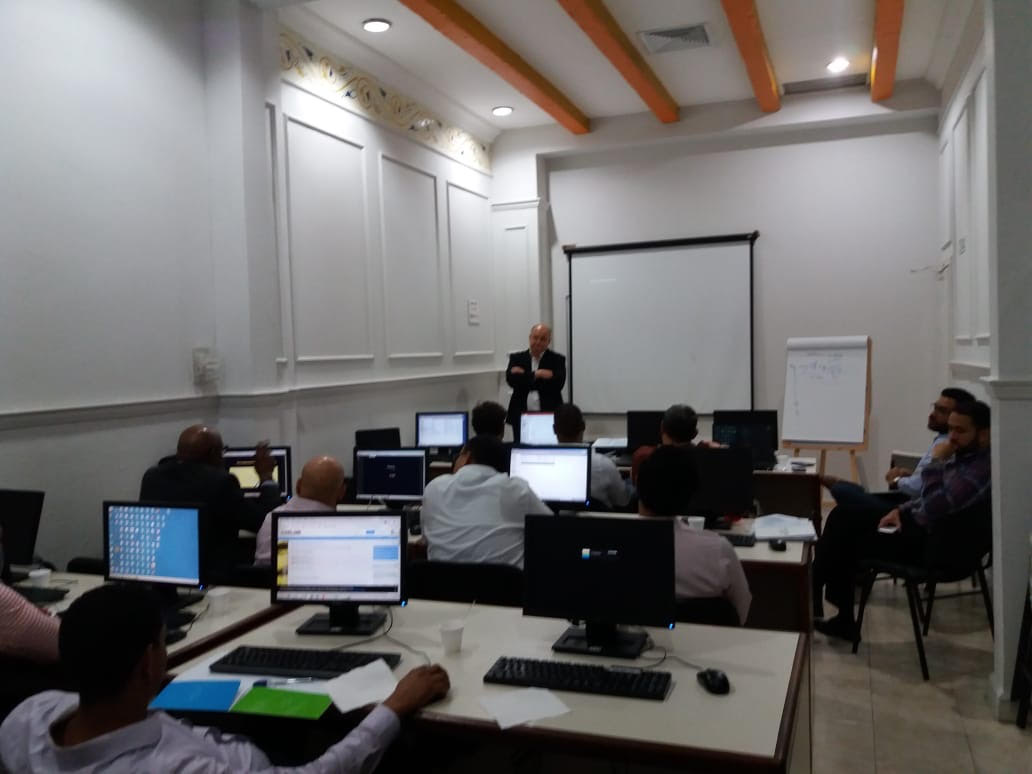
The workshops brought together government authorities, technical institutions, the private sector, and international cooperation partners, fostering dialogue on opportunities, regulatory challenges, and certification models applicable to the cases of Colombia and Panama.
Through these initiatives, OLACDE reaffirms its commitment to promoting hydrogen as a strategic vector for a sustainable energy transition in Latin America and the Caribbean.