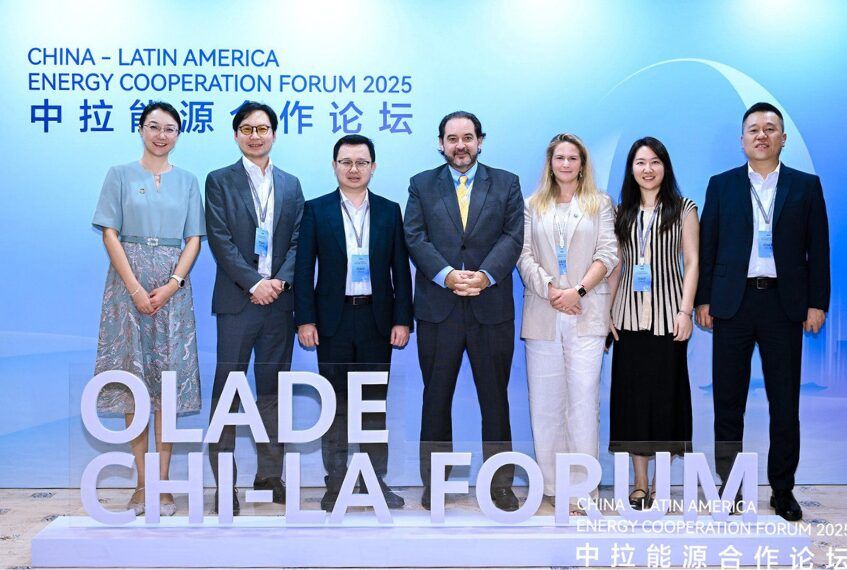
The Executive Secretary of the Latin American and Caribbean Energy Organization (OLACDE), Andrés Rebolledo, carried out an intensive work agenda in Shenzhen, China, where he presented Latin America and the Caribbean’s progress in the transition from traditional power grids to smart and resilient systems.
The participation took place within the framework of the Global Low-Carbon Industry Forum, organized by the China Energy Research Society, the Global Solar Council (GSC), and Huawei Digital Power, during the International Digital Energy Expo (IDEE) 2025. The forum brought together government leaders, electric utilities, energy companies, and international organizations to discuss the future outlook for renewable energy and the construction of smart grids worldwide.
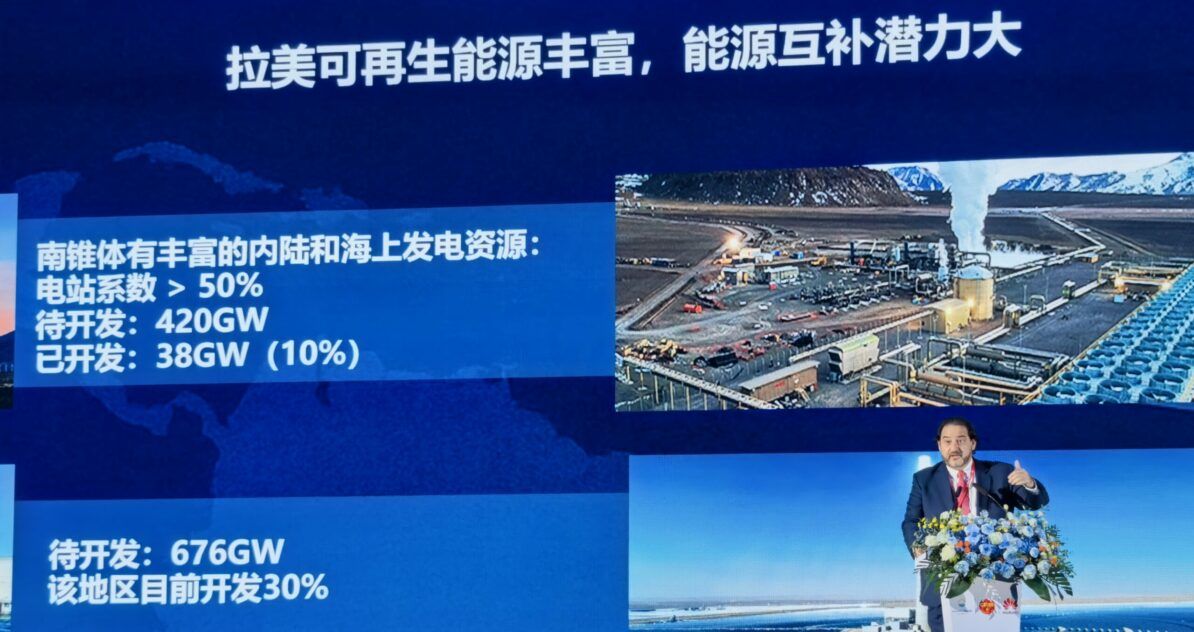
In the session “Latin America and the Caribbean: From Traditional Power Grids to Smart and Resilient Systems,” Rebolledo presented OLACDE’s vision of the region’s energy transformation, highlighting:
• The still-untapped potential in solar, wind, geothermal, and green hydrogen energy.
• The need to modernize power grids toward distributed, smart, and resilient systems.
• The importance of solid regulatory frameworks, technical standards, and regional coordination to attract investment and accelerate the transition.
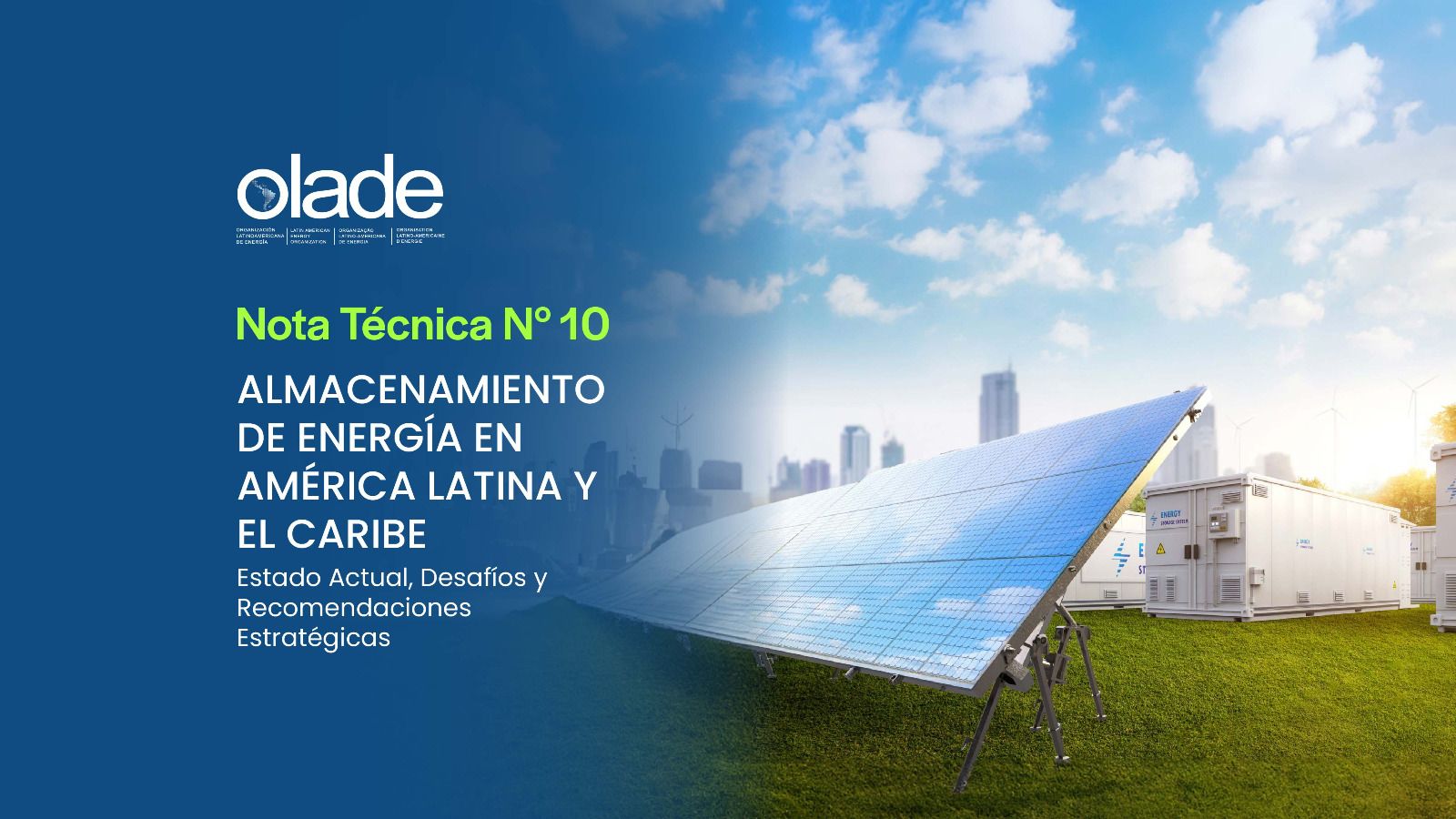
Also, as part of the LATAM Energy Cooperation Forum, he presented the White Paper on Energy Storage in Latin America and the Caribbean, which identifies storage as a strategic piece of the energy transition. The report reveals that the region currently has 2.7 GW of installed capacity, of which 1.7 GW corresponds to batteries, in a context where renewable energy already accounts for 70% of the regional electricity matrix, well above the global average of 30%.
OLACDE’s projections estimate that, by 2030, 24 GW of storage and 285 GW of new renewable capacity will need to be added, figures that would double by 2035. Rebolledo highlighted success stories in countries such as Chile, Brazil, Mexico, Argentina, and Honduras, emphasizing that the combination of clear targets, innovative regulatory frameworks, and competitive tenders is helping to accelerate the deployment of these technologies.
Meanwhile, OLACDE’s Chief of Staff, Mijal Brady, took part as moderator of the panel “From Planning to Dispatch: When, Where, How, and Why to Deploy Battery Energy Storage Systems in LATAM,” which brought together representatives from companies and organizations in the region’s energy sector.
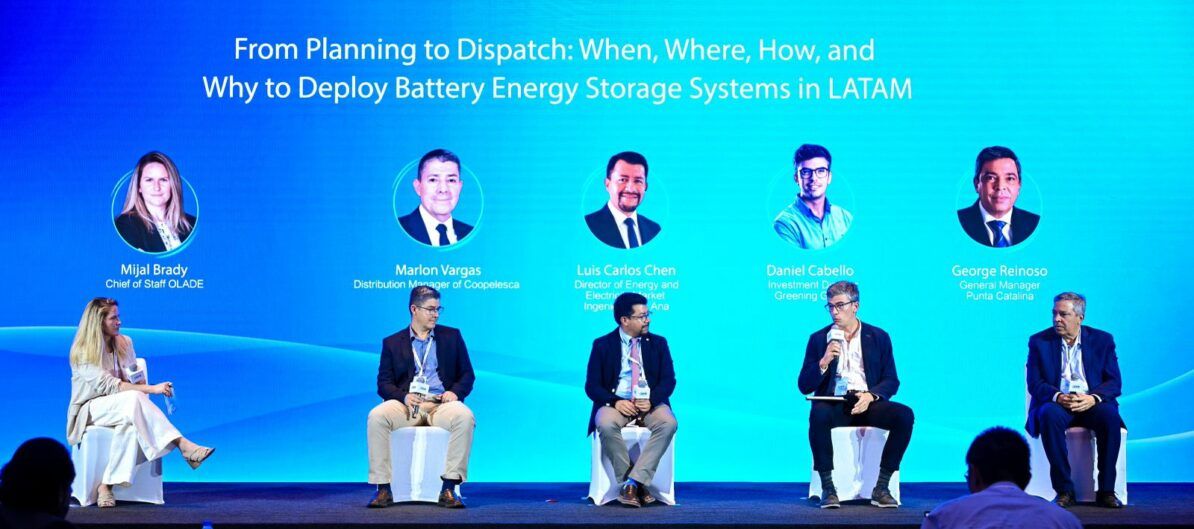
Brady highlighted the importance of aligning energy planning with the strategic deployment of battery storage systems, considering the benefits for grid stability, management of renewable intermittency, and reduction of energy vulnerability.
The panel featured contributions from experts at Coopelesca (Costa Rica), Grupo Corporativo Santa Ana (Panama), Greening Group (Mexico), and Punta Catalina (Dominican Republic), who shared experiences on the implementation, financing, and regulation of these technologies.