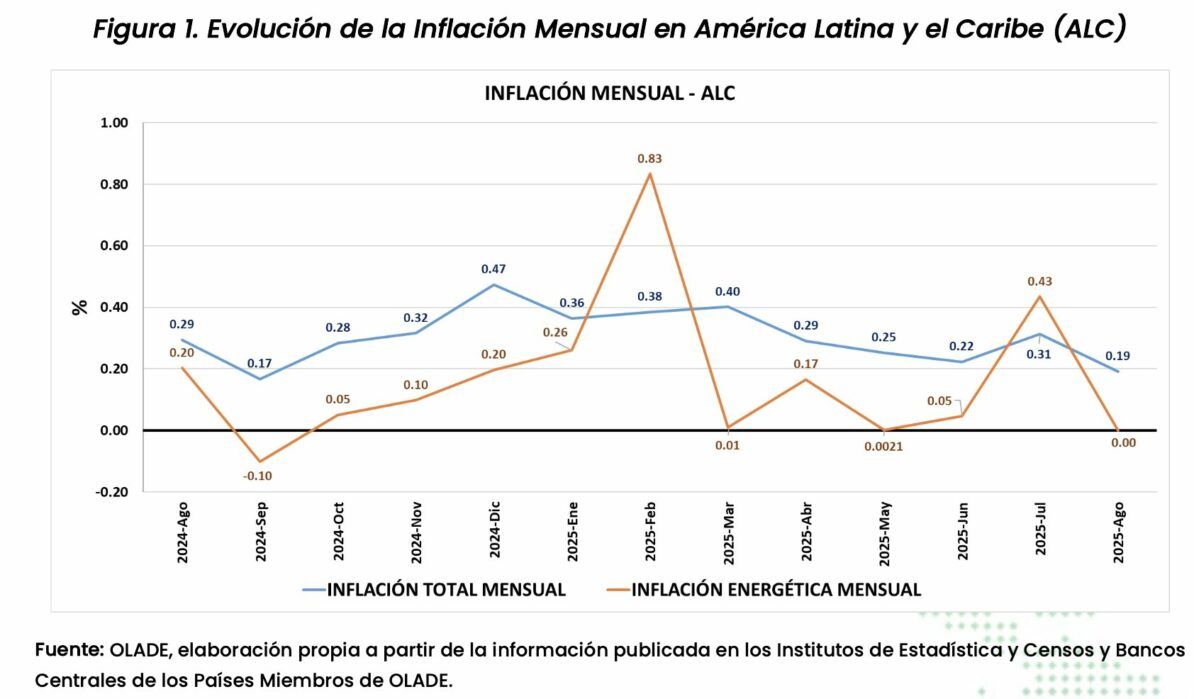
LAC’s monthly energy inflation in August 2025 was 0%. Half of the 20 countries analyzed in the region recorded negative variations in price indices (they went down). On the other hand, total monthly inflation fell from 0.31% in July to 0.19% in August, reaching the lowest value so far this year. See Figure 1.
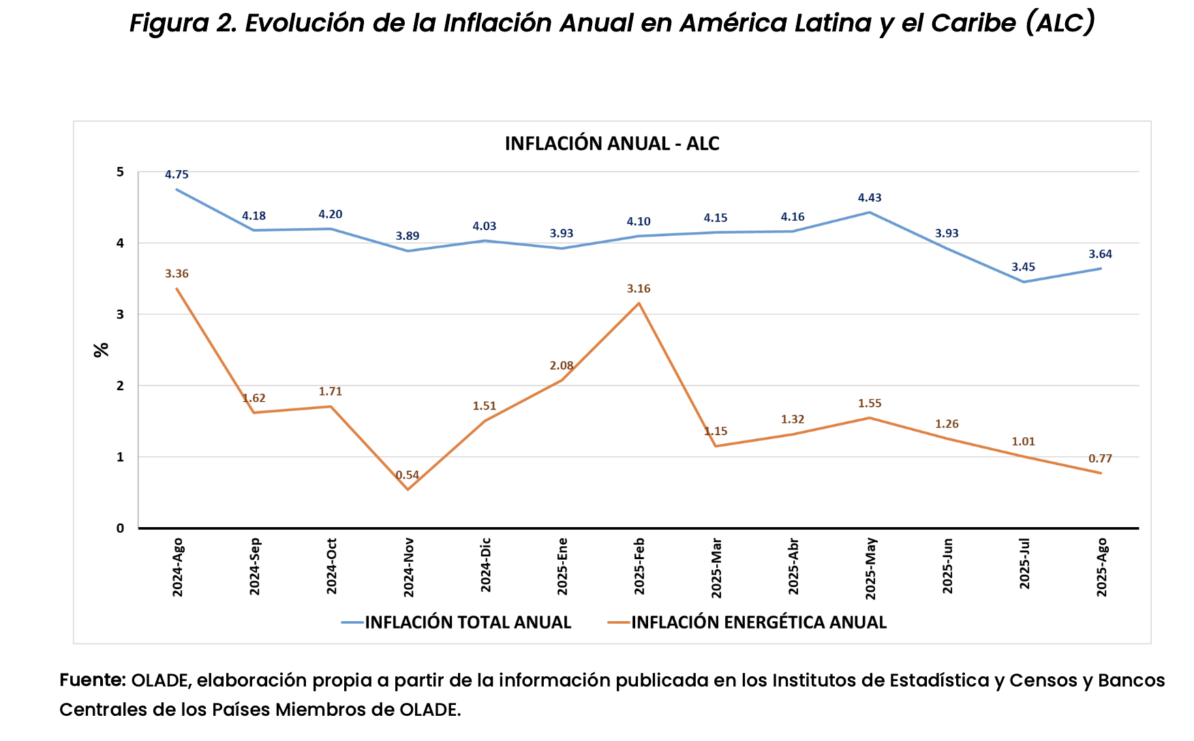
 Annual energy inflation in LAC continued to decline for the third consecutive month, reflecting a slowdown in the growth of the energy basket’s price index. In August 2025, it stood at 0.77%, a value significantly lower than the one recorded in the same month of 2024, when it reached 3.36%.
In contrast, total annual inflation rose in the latest month, going from 3.45% in July to 3.64% in August, showing an increase in overall price indices. See Figure 2.
Year-on-year energy inflation in OECD countries rose from 0.34% in July to 0.7% in August 2025, while in LAC it decreased from 1.01% in July to 0.77% in August 2025.
For five consecutive months, year-on-year energy inflation in the OECD remained below that recorded in LAC. However, in August 2025, LAC and the OECD reached approximately the same value of 0.7%, despite differences in local prices, the types of fuels that make up the energy basket, or consumption patterns. See Figure 3.
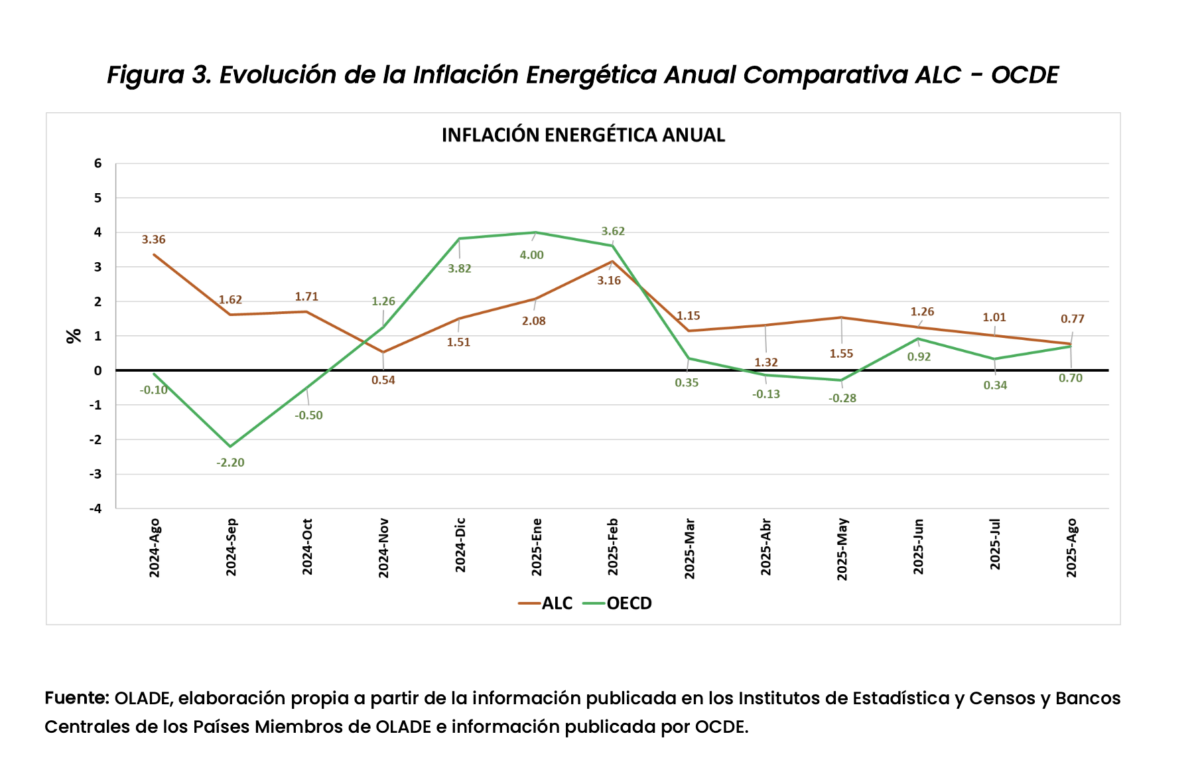
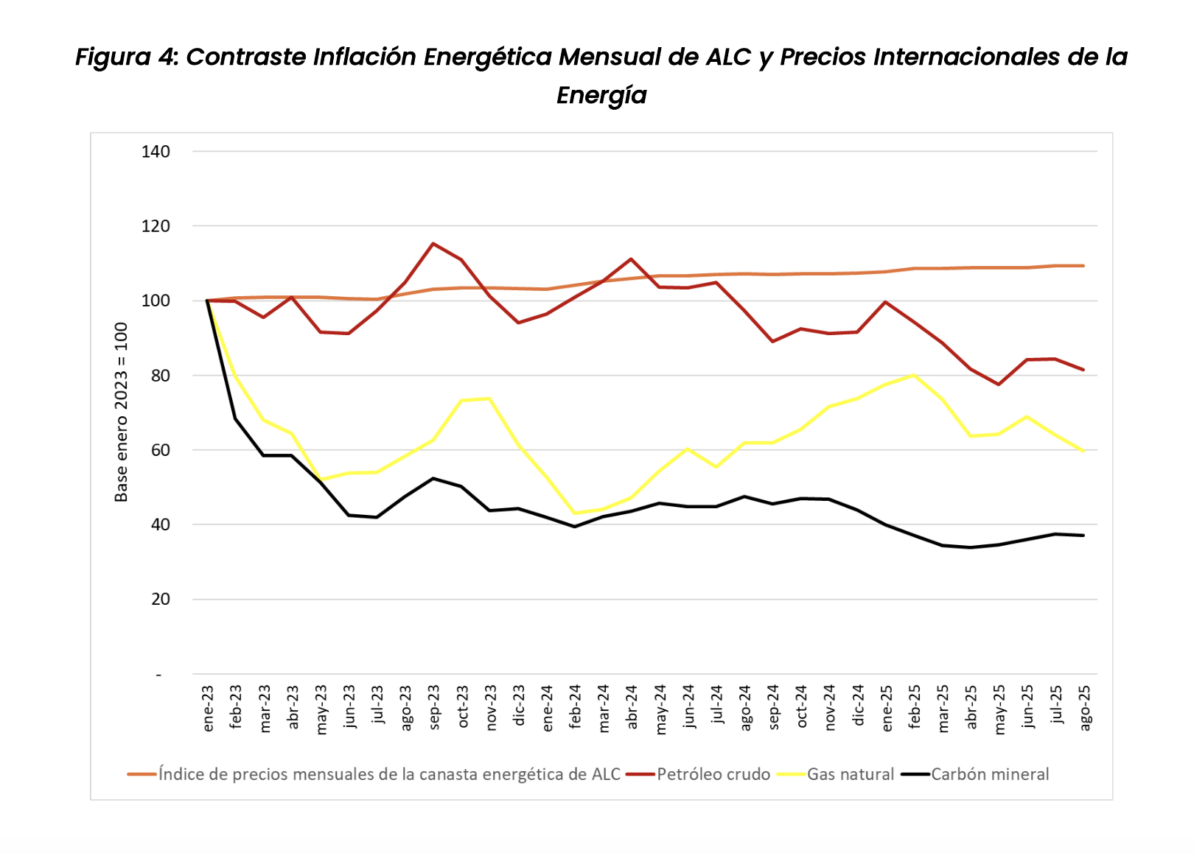
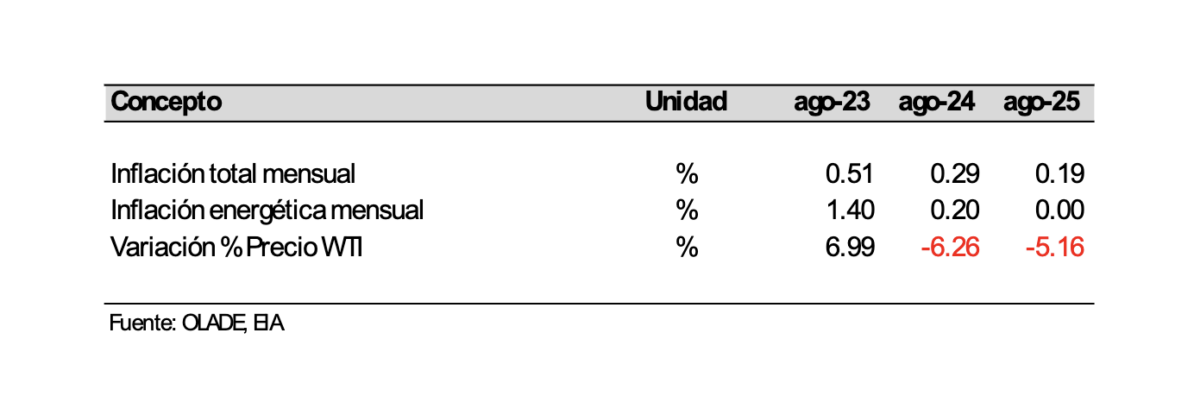
Figure 4 shows that all three international energy price indices (oil, gas, coal) declined in August 2025, with the sharpest drop in the natural gas price index at -6.7%; this behavior most likely explains, to a large extent, why monthly energy inflation fell in half of the LAC countries analyzed. In fact, the table below reflects that the monthly variation in the WTI price was also negative, at -5.16%, a trend consistent with the price index developments described above.