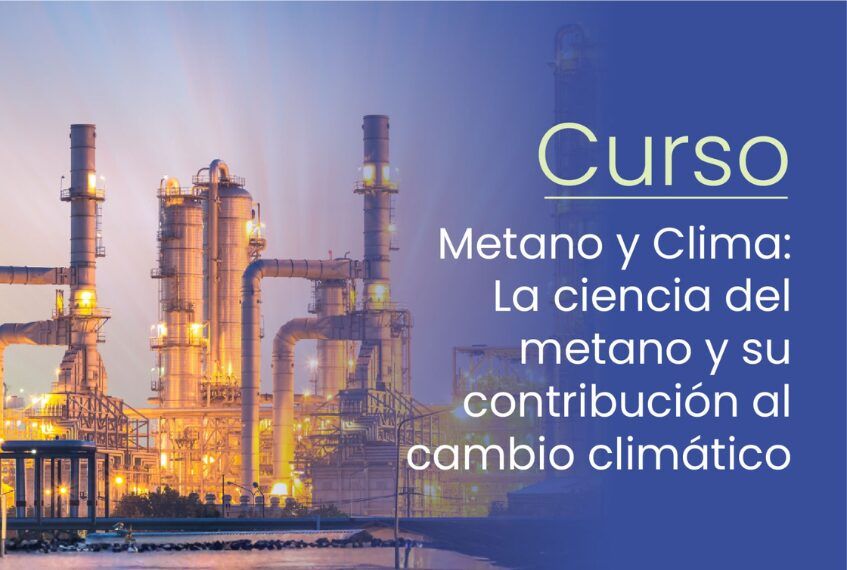
The opening session took place for the course “Methane and Climate: The Science of Methane and Its Contribution to Climate Change,” an initiative led by the Latin American and Caribbean Energy Organization (OLACDE) and the Latin American and Caribbean Methane Emissions Observatory (OEMLAC). This training seeks to strengthen the region’s technical capacities to understand the role of methane in accelerating climate change and the strategies needed to mitigate it. The program covers the scientific foundations of methane and its relationship to climate, the main emission sources and global trends, the impacts on health, ecosystems, and air quality, as well as regional initiatives and approaches for reducing emissions in Latin America and the Caribbean.
During the opening, Gloria Alvarenga, OLACDE’s Director of Integration, Access and Energy Security, highlighted the relevance of this topic for the region, underscoring that reducing emissions is one of the most effective strategies for limiting global warming in the short term, meeting climate commitments across various sectors, and generating social, economic, and environmental benefits. For his part, Gastón Siroit, OLACDE’s Technical Advisor, noted that this course sets a precedent for understanding how methane is generated, what its impacts are, and how to approach mitigation strategies across different sectors.
The first session was delivered by Alejandra Garzón, OEMLAC’s Technical Coordinator, who explained the processes of methane formation and removal, the main emission sources, and their direct relationship with climate change. Regional and global mitigation initiatives were also presented, highlighting the importance of technical cooperation and capacity building to address this challenge. Garzón emphasized that this training aims to help more stakeholders understand why it is strategic to prioritize methane mitigation actions in the short term, given their impact on global warming and on multiple sectors.
This training space reinforces OLACDE’s commitment to promoting knowledge, building capacity, and fostering technical cooperation among countries, bringing together professionals from the region to build solutions to climate change. OLACDE invites participants to join the next session of the course, which will continue exploring emission sources and the mitigation strategies transforming climate action in Latin America and the Caribbean.
Register here: https://capevlac.olade.org/recursos-naturales/courses/metano-y-clima/