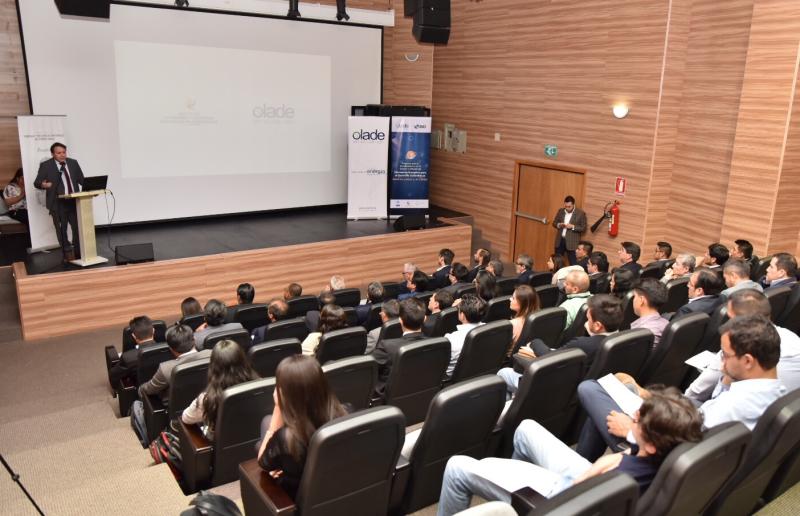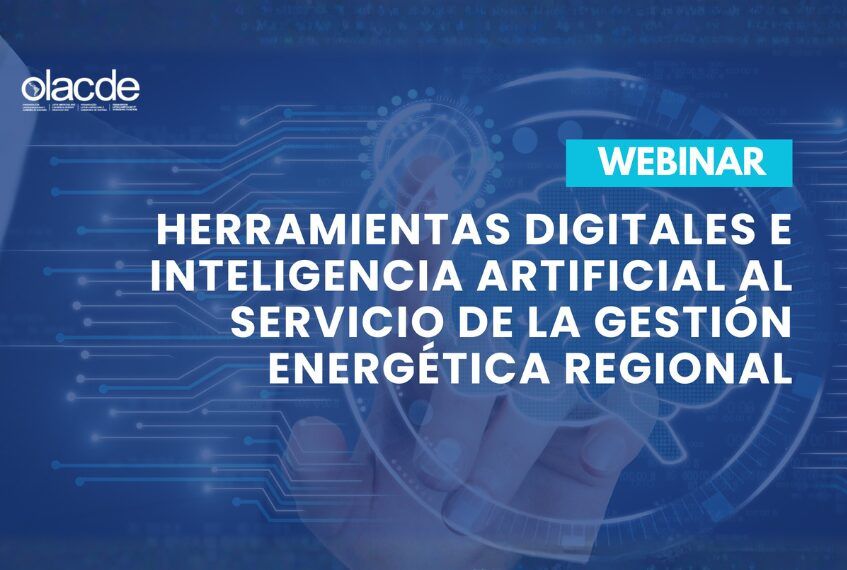
The Latin American and Caribbean Energy Organization (OLACDE) held the webinar Digital Tools and Artificial Intelligence in the Service of Regional Energy Management, a technical dialogue space aimed at analyzing the growing role of digitalization and artificial intelligence in transforming the region’s power systems.
The event addressed issues related to the ethics and governance of digital technologies, the development of more flexible power systems, the optimization of generation and transmission expansion in contexts of high renewable energy penetration, and the use of artificial intelligence to improve energy demand forecasting.
The webinar featured Marta Cabeza, Superintendent of Chile’s Superintendency of Electricity and Fuels; Andrea Tutte, Smart Grids Project Manager at UTE – Uruguay; and Alessandra Amaral, Executive President of ADELAT, who shared experiences and progress in digitalization, automation, smart metering, and artificial intelligence applied to energy management.
During the presentations, speakers highlighted that digitalization and artificial intelligence are driving a profound transformation in the region’s power systems, which are moving toward more automated, bidirectional networks with greater response capacity, enabling more efficient operation in the face of new energy flows and consumption patterns.
The role of smart metering was also highlighted, as information available every fifteen minutes is replacing traditional processes, offering a more detailed view of consumption, reducing estimates, strengthening operational resilience, and improving the continuity of electricity supply.
The intensive use of data and artificial intelligence tools is helping accelerate tasks that used to take weeks, optimize inspections, support regulatory processes, and provide more timely responses to users. These technologies also facilitate early fault detection, loss reduction, and real-time asset management.
During the opening of the webinar, Andrés Rebolledo, OLACDE’s Executive Secretary, highlighted the importance of incorporating digitalization, artificial intelligence, and the growth of data centers into the analysis of Latin America and the Caribbean’s energy future, noting that these trends are rapidly transforming both projected electricity demand and the operation of energy systems and their relationship with users.
He also emphasized the importance of maintaining permanent spaces for technical dialogue, experience sharing, and regional analysis, noting that understanding these global trends is essential to anticipating the challenges and opportunities that will shape energy development in the coming years.
The webinar concluded by highlighting that the transition to modern grids requires digital infrastructure capable of integrating electric mobility, storage, distributed energy resources, and new operating models, establishing digitalization and artificial intelligence as strategic pillars for more resilient, efficient, and sustainable energy management in the region.