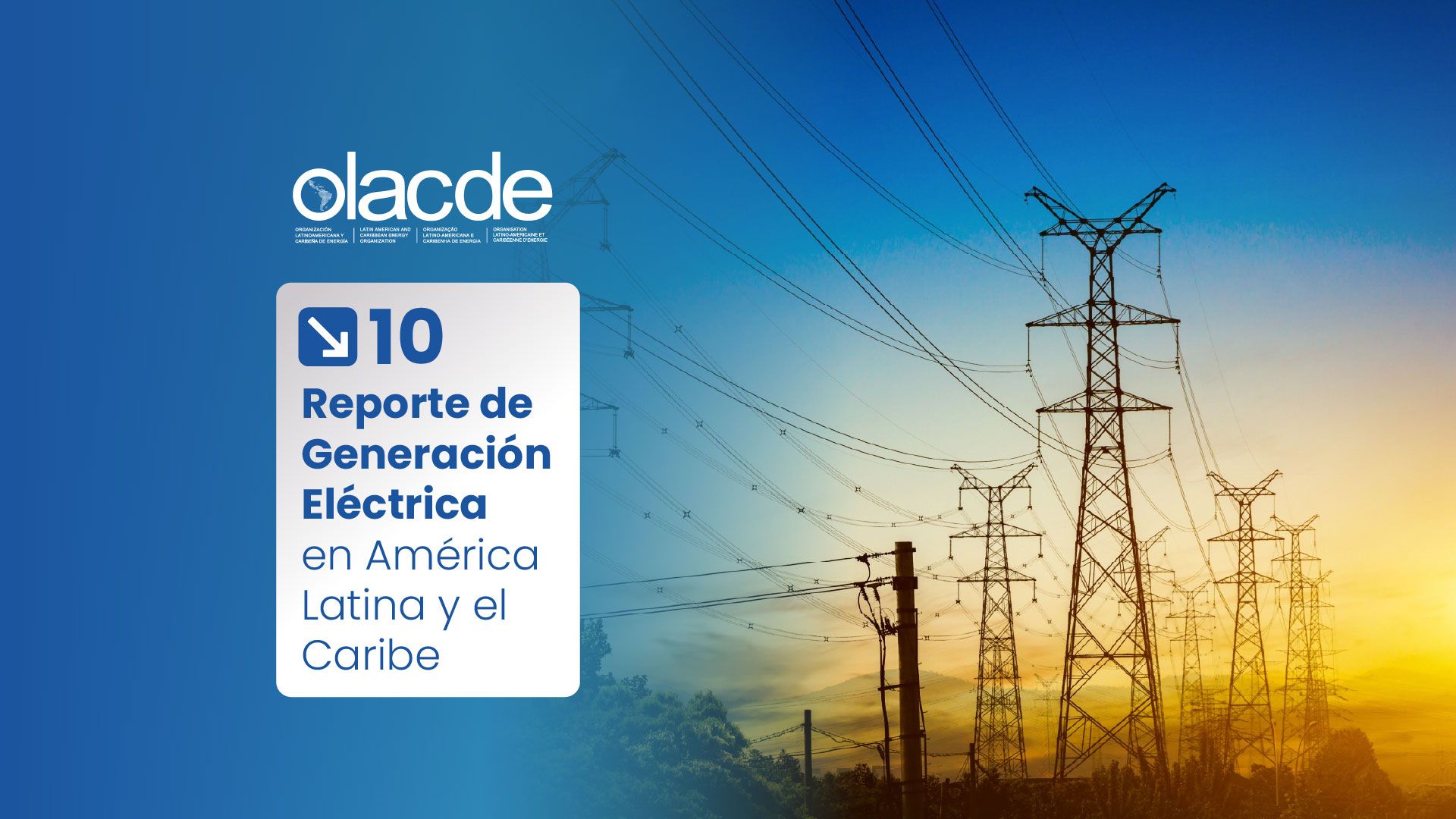
Latin America and the Caribbean (LAC) continues to strengthen one of the cleanest electricity matrices in the world. In April 2026, the region produced 164 TWh of electricity, 67% of which came from renewable sources. This figure underscores the structural predominance of clean energy despite the climate fluctuations that affected hydroelectric generation. This means that, over the course of a year, regional electricity generation grew by 4.5%.
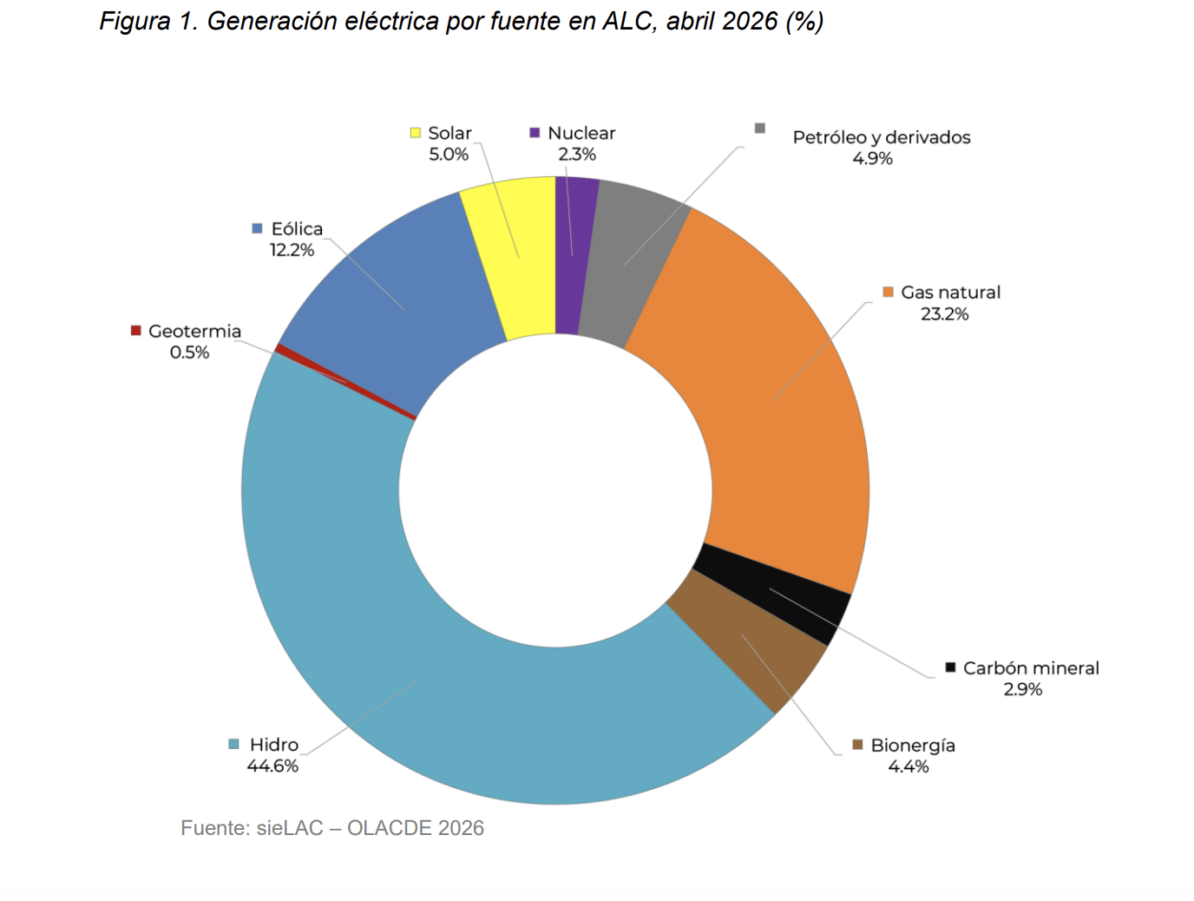
The electricity generation report from the Latin American and Caribbean Energy Organization (OLACDE) shows that hydroelectricity remained the leading source of generation with 44.6% of the regional total, followed by natural gas (23.2%) and wind energy (12.2%). Together, these three technologies accounted for nearly 80% of the electricity produced in LAC during the month analyzed.
Although hydroelectric production decreased by 9.4 TWh compared to April 2025, this decline was offset by increases in wind generation (+5.1 TWh), natural gas (+4.6 TWh), and bioenergy (+3.3 TWh). This highlights the system’s capacity to adapt to changing climate conditions and growing technological diversification.
The renewability index also confirms the region’s energy leadership. Nine of OLACDE’s 27 member countries exceeded the regional average of 67%: Paraguay (100%), Uruguay (97%), Costa Rica (92%), Ecuador (92%), Brazil (88%), Colombia (87%), Venezuela (86%), Belize (76%), and Peru (68%).
For OLACDE, these indicators reflect that the sustained integration of renewable technologies, together with complementary sources such as natural gas, strengthens both the security of electricity supply and the system’s capacity to cope with climate variability—one of the main challenges facing electrical systems in this region.
Check out the full report at the following link: https://www.olacde.org/publicaciones/reporte-ge15/